


Persuasion Magic: Applying Mentalist Oz Pearlman’s Methods to MSP Sales


What do managed service providers and mentalists have in common? The same techniques that work to win over and delight an audience can work to win over a prospect and close deals more effectively.
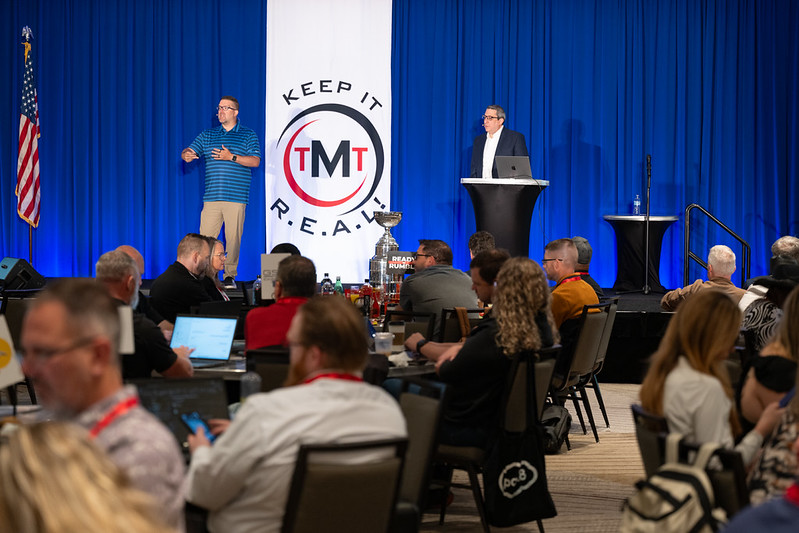
Oz Pearlman, a mentalist who came to fame in 2015 on the TV show America’s Got Talent (AGT), recently performed and spoke about his methods at a peer group meeting for TMT’s highest level of membership. Since winning third place on AGT, Pearlman has appeared on NBC’s Late Night with Jimmy Fallon, The TODAY Show, and ABC World News and has been profiled in Forbes and The New York Times.
At the peer event, Pearlman put on a masterclass in influence, persuasion, and the subtle art of reading people that every MSP can apply to transform their sales presentations.
The Opening Hook Technique
Pearlman opened his performance by promising to “blow your mind.” Demonstrating the distinction between being impressive yet forgettable and being memorable, he introduced the same card trick two different ways.
The first introduction was ordinary and general: “Choose a random card from an imaginary deck.” The second was exciting and specific: “I want butterflies in your stomach, your favorite card, hold it high with pride!”
Despite correct guesses both times, the audience reacted differently: lukewarm vs. enthusiastic applause. “You’re not forgetting me. You’re going to be talking about me for years,” Pearlman noted after the second version.
Similarly, MSPs need compelling opening statements that immediately capture attention. Kick off sales presentations or marketing emails with an opening statement that’s bold, memorable, and impossible to ignore. For example: “In just 30 minutes, you’ll discover how to eliminate 90% of your IT headaches and cut costs by 25%, without compromising performance.” A line like this doesn’t just make prospects lean in; it compels them to sit up, take notice, and start anticipating results.
Read the Room
Pearlman masterfully demonstrated the mentalist technique of reading subtle facial cues and body language to adjust his approach in real time. Engaging TMT and MSP Success founder Robin Robins, he guessed her first crush’s name by asking her to think of each letter sequentially while watching her reactions.
When he asked her to imagine the fifth letter, “she panicked,” he explained. “Why? Because his name doesn’t have a fifth letter.”
He emphasized that her eyes gave it away: “If somebody tells me they can read my mind, I’m calling shenanigans … I can’t read minds either. I read people. Subtle difference.”
Apply this to your sales presentations by:
- Watching eyebrow raises (curiosity/interest)
- Noticing when smiles don’t reach the eyes (hidden concerns)
- Observing posture shifts during different topics
- Adjusting presentation speed based on engagement cues
Know Every Point of Resistance
Understanding resistance patterns transforms rejection into engagement, making technical expertise more compelling to decision-makers.
Pearlman explained that when he was a restaurant magician at age 14, he faced immediate customer barriers: “Does he want money? How long will this take?” This taught him to anticipate objections before approaching prospects.
Instead of asking, “Want to see magic?” (easily rejected), he opened with, “Can you believe it’s your lucky night?” This positive reframing eliminated resistance points.
Before presenting cloud migrations or security solutions, identify client concerns like budget constraints, downtime fears, and implementation complexity. Address these proactively in your opening.
“Don’t give people points where they can say no,” Pearlman advised. “Try to learn what they’re thinking so they say yes.”
The Illusion of Choice
In another demonstration, Pearlman handed participants dice, instructing them to choose numbers instead of rolling. “You’re in charge of your destiny,” he said, while steering them toward the predetermined number he wanted them to choose.
“Make your own luck through hard work, persistence, and dedication,” Pearlman explained. “You’ve got to create the environment for you to get lucky.”
MSPs can use this technique to let prospects feel in control while guiding them toward predetermined outcomes.
For example, present two or three service tiers, all of which are profitable for you, but structured so that prospects focus on choosing the right level rather than questioning whether they need the service at all.
An Unforgettable Close
Pearlman demonstrated powerful closing techniques by weaving together elements from his entire performance, culminating in a grand finale that dazzled the audience. This masterful conclusion demonstrated the results of preparation, psychology, and showmanship.
MSPs can mirror this approach when closing sales presentations. Reference earlier discussion points, connect multiple client pain points to your proposed solution, and create a compelling narrative. Like Pearlman’s finale, your close should leave a lasting impression and feel like the natural conclusion where your services become the obvious choice.
A Post-Presentation Ritual
After every performance, Pearlman obsesses over what he could have done better.
“That’s the mark of people who jump levels and become more successful,” he told the audience. “The top 10% are constantly iterating, not accepting the status quo.”
Similarly, MSPs should review sales presentations retrospectively to find opportunities to make improvement.
Mind-Bending Results
By adapting Pearlman’s mentalist techniques, MSPs can transform sales presentations into powerful influence tools. Master memorable openings, read reactions, anticipate objections, offer guided choices, and deliver strong closes to become a trusted advisor.
Apply these with dedication and watch your sales presentations become as persuasive and memorable as Pearlman’s mind-bending performances.
For more sales tips, see Win More MSP Sales with the Wedge Technique

Power Your MSP Success with the Kaseya Community
Get fast answers, share product ideas, access exclusive resources, stay current on Kaseya product innovations, and connect with MSP peers.
2026 Kaseya State of the MSP Report
Get 2026 MSP insights from 1,000 plus providers and learn how to grow revenue, adapt to market pressure, and stay competitive.

Get More MSP Insights
Join 50,000+ MSP professionals receiving expert insights, best practices, and industry trends.