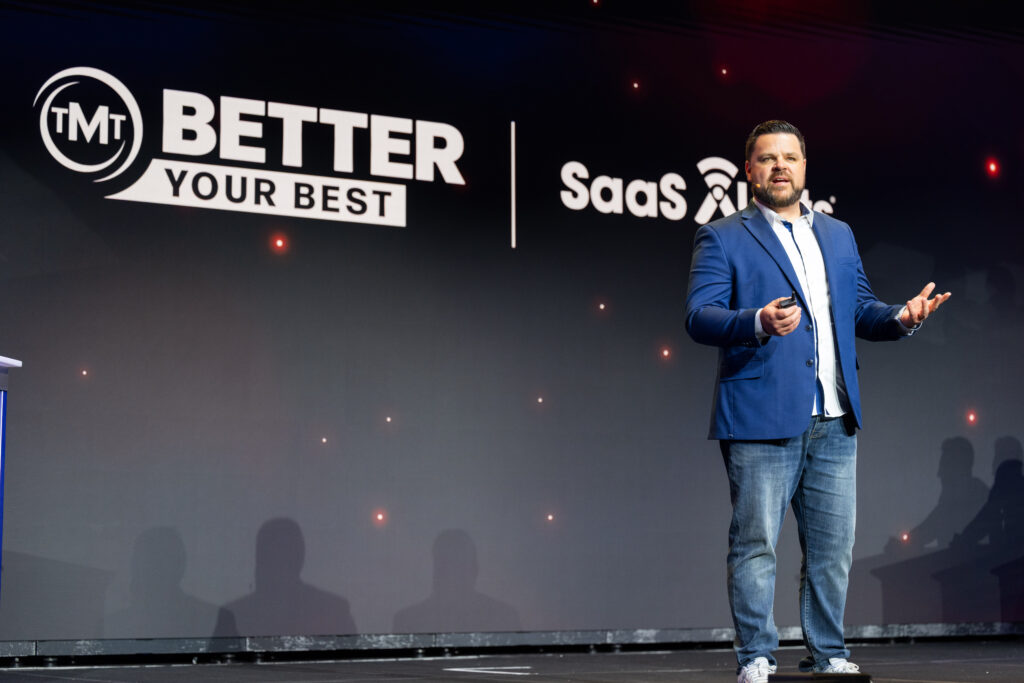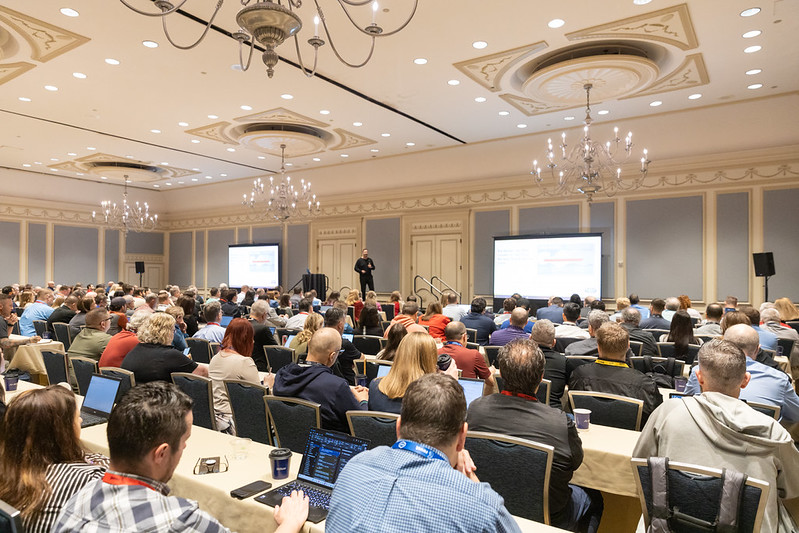
TMT’s 19th Annual IT Sales & Marketing Boot Camp kicked off Tuesday morning at the Hilton Anatole in Dallas, Texas. More than 1,500 in-person attendees and several hundred virtual participants joined to take part in 112 sessions over three days.
The theme for this year’s conference is “Are you smarter than your competition? Outplay. Outsmart. Outgrow.”
The content is designed to help attendees rethink outdated strategies, differentiate from price-driven competitors, and grow their market through better execution, systems, and AI.
A Clean List + A Specialized Niche = Business Growth
Business growth is at the heart of Boot Camp. Having a clean list of prospects to market to is a key growth driver.
Adam Spencer, CEO of 911 IT, addressed this in a breakout session focused on list building. According to Spencer, the most important part of building a quality list is to “stop spending good money on bad data.”
In many cases, this means building a clean CRM. To do this, you must evaluate companies in your database and remove those unlikely to be a good fit for your business. Spencer cited a beauty parlor as an example: it may appear to be the right size based on revenue or employee count, but their limited IT infrastructure may make them a less-than-ideal client.
Spencer recommends making a simple phone call to the prospect and speaking with the “gatekeeper” who answers to evaluate fit. Gatekeepers are often talkative and will provide the needed information like company size, IT support, and appropriate point of contact. Once cleaned and verified, the prospect’s record can be added to the CRM and included in marketing efforts.
Spencer also stressed the importance of knowing how many leads you need to generate. He emphasized starting with the desired number of appointments and “working the math backward.”
For example, if 220 pieces of direct mail generate 5 appointments on average, then you would need to send 4,400 letters to secure 100 appointments. Hitting your full list two times a year means you will need a list of at least 2,200 prospects. Specializing in your ideal niche can also give your revenue a massive boost, make your team more efficient, and streamline operations, shared Fred Sagester, senior MSP coach at TMT and former MSP owner.
“When I first started the people around me said, ‘No, don’t [specialize]. You’re limiting yourself; you have so many more options if you do everybody.’ But it worked out that as I learned more to join a target market, I made more money. I got higher-value clients. And you can add a lot more value to your existing clients,” said Sagester.
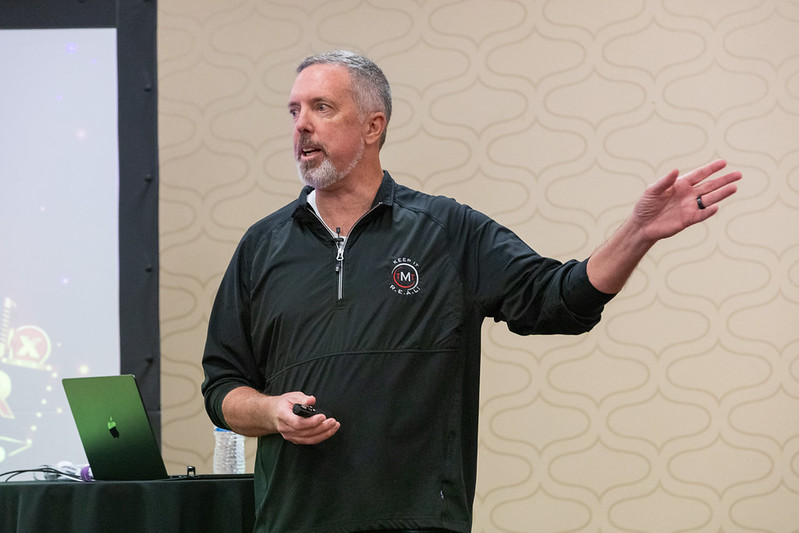
The goal of specialization is to move from a generalist to a specialist—and ultimately to a “celebrity,” Sagester explained. Once you do that, “the earning potential goes through the roof.”
Sagester shared how he became a local celebrity amongst dentists in his area—to the extent that he became known as “the teeth guy.” This reputation led to countless referrals, as clients trusted Sagester to handle their technology so they could take care of their practice.
Sagester outlined four key considerations when identifying your ideal niche to target: What do you already know? Start with your existing experience. Do you have a background in a particular industry or clients you enjoy working with? Consider the available customer base in your geographic area.
- Who do you NOT want to work with? Eliminate businesses that don’t align with your goals.
- Who DO you want to work with? Of the options that are left, identify the niche you most want to serve.
- How do you set yourself apart from everyone else? Determine how you candifferentiate yourself in your chosen vertical and become known within it.
AI Vendor Partnerships Become Crucial
“You have six months to embrace AI and make it work for you,” said Eddie Phillips, a former MSP owner and the current global director of MSP strategy and enablement at Ironscales. This urgency reflects how rapidly small to medium-sized businesses are integrating AI themselves. If your MSP cannot support their initiatives, clients will find one that can.
Phillips shared three truths about integrating AI into your MSP:
- It will expose your effectiveness. “AI can only work with what you give it. If you’ve got bad data, bad time tracking, [and] bad ticket descriptions and resolutions, that’s the data that’s going to spit out for you,” he said. “Garbage in, garbage out.”
- It will highlight your efficiency. “If you’re still using legacy tools, equipment, and defenses, it’s time to change. Pivot towards new solutions that integrate AI. Think about the solutions you offer today and how AI is going to impact them,” Phillips said.
- It will test your aptitude. “It’s going to test your ability to change your paradigm, to change your thought process, and to give up things that you may not be willing to give up.”
The takeaway: “Your partnerships will define you.” Strong AI vendor partnerships are critical for navigating the challenges MSPs face today. With that in mind, Phillips gave attendees three key components to include in their vendor-vetting framework.
- Audit. If your vendor can’t demonstrate measurable outcomes, you’re buying hope disguised as software.
- Elevate. Shift from rigid rules to dynamic, AI-driven defense strategies.
- Optimize. Automate with AI but keep humans in the loop. It’s critical to give AI a leash, not free rein.
Cybersecurity Revenue Opportunities Present Key to Growth
Cybersecurity offerings have long been table stakes for MSPs, but they also present a major growth opportunity.
Cooper Edmunds, Co-founder of Petra Security, highlighted trends in business email compromise (BEC) attacks, which remain the most costly cybercrime, resulting in $50 billion lost over the past decade. The average wire fraud cost is $137,000, Cooper noted.
BEC attacks are both easy to execute and increasingly difficult to detect. Emerging tactics include residential proxies, which allow an attacker to sign in from anywhere without a proxy or VPN, and MFA bypass, in which a bad actor navigates around MFA requirements to gain unauthorized access to an account.
However, there is opportunity amid the risk.
Jimmy Colvin, Technical Account Manager at Huntress, and Becky Teal, Senior Community Leader at Huntress, explained how reframing BEC as a revenue opportunity can open up new business avenues.
Tabletop exercises, for example, offer a way for the MSP and client to identify gaps in incident response plans, test decision-making, and improve communication in a simulated BEC attack. These exercises set clear expectations for recovery in the event of a real attack. State of the MSP keynote caps off the day
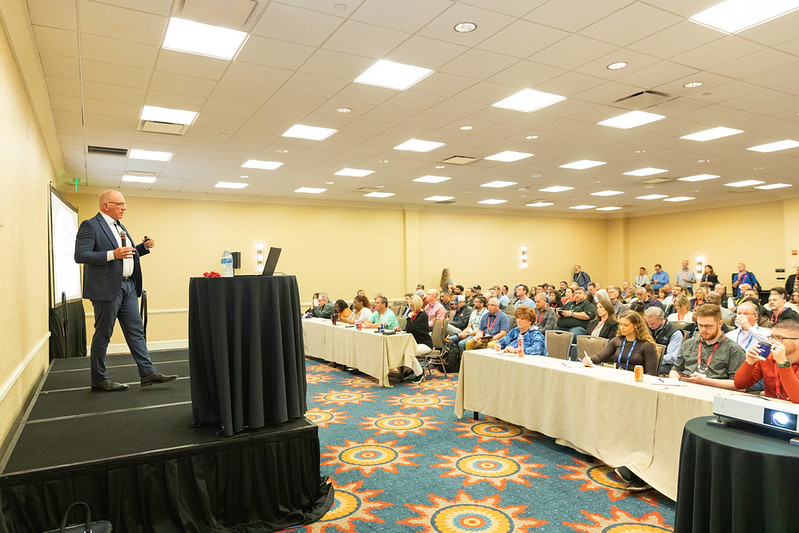
The day wrapped up with the first keynote of the conference from Robin Robins, TMT founder, and Dan Tomaszewski, EVP of Channel at Kaseya. They delivered the State of the MSP Industry, setting up the strategic tone for this year’s Boot Camp.
Robins analyzed the current MSP landscape, detailing an approaching inflection point, key profitability drivers, emerging risks, and strategies for success. Tomaszewski unpacked how Kaseya is evolving to better support partners, enhance their marketing, and prime them to grow.
For coverage of both opening keynote speeches, tune in tomorrow for more Boot Camp coverage.
For additional perspective on today’s MSP landscape, check out Legal, Tech, and Operational Insights from Kaseya Connect Local Dallas.