
Tight budgets. Decision-making by board. Long sales cycle. Technical debt.
Red flags for an MSP, right?
Not so fast, say MSP business owners specializing in public sector organizations. Local governments and municipalities can be reliable, profitable accounts that pay their bills on time, value trust and relationships, and often purchase additional products and services because they prefer dealing with one provider—making them high-value customers.
Here’s what you need to know about targeting and serving the public sector, from three MSPs who specialize in it.
Why Public Sector Clients Are Worth the Effort
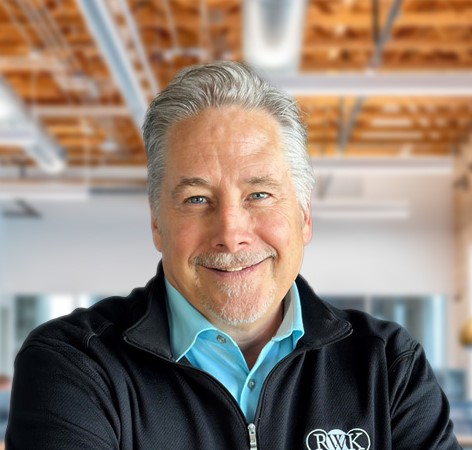
Jeff Reiter initially picked up a few public sector clients after founding RWK IT Services in 1998. The CEO of the Chicago-based, 20-person MSP says he enjoyed getting a “behind the scenes” look at local government in action and the hardworking people doing their best for their communities. In addition, Reiter says, “I like the people and I like the personal relationships that get built from it. The sense of trust is highly regarded.”
“They come to trust us,” agrees Bill Prusow, president and CEO of Pros 4 Technology, an MSP based in Sheboygan Falls, Wisconsin, serving numerous counties throughout the state. “They know that we can make things work.” Before starting his MSP in 2009, Prusow consulted for two municipalities, which remain his customers today. It’s a space he grew into. “I got to know them from the bottom up.”
Lisa Brown, founder and CEO of CST Group, a 10-person MSP in Malone, New York, says local government was a natural fit when she started her business in 2000. She had previously worked in county government and “already had an understanding of what their needs were. I knew them, and they need us.”
Understanding Market Size and Pain Points
As of the U.S. Census Bureau’s 2022 Census of Governments, there were 90,837 local governments in the United States. These include about 3,031 county governments; 19,000 municipal governments (cities, towns, villages, boroughs), 16,000 townships (common in the Northeast and Midwest); 12,000 school districts; and at least 31,000 special entities (e.g., water, fire, parks). Each state, plus the District of Columbia, also has its own government.
Brown, Reiter, and Prusow all agree cybersecurity is a primary pain point for the public sector. “Most of our clients have very little understanding of the cybersecurity requirements that are being put on them,” Brown says.

She says a new client typically has three immediate needs. One is obtaining cybersecurity insurance, which requires putting the proper security controls in place to make it affordable. Second is improving communications with the community and internal departments. And third is securing their infrastructure and constituents’ data.
The potential reputational harm of a cyber incident or downtime is significant, Reiter adds. “Not only for their day-to-day operation and [proverbial] black eye they might have, but every so many years there’s an election. They certainly don’t want to have reputational harm going into an election [that] somebody wants to exploit … to boot them out of office.”
These pain points, Reiter says, “are rooted in a need to be a trusted resource to their community. People just assume that [their] city or town fire department and 911 center are effective at what they do. That’s a high level of trust and pressure put on them to serve their community.”
Municipalities also need help with planning and sticking to budgets, Prusow says. “We’re meeting with them multiple times a year … We’re trying to help them plan, not let things get obsolete. A lot of times we’re telling them about newer technology or helping them apply for grants.”
Navigating Unique Requirements and Challenges
And speaking of budgets, they are fixed or limited, Reiter says. “They can’t go out and create a profit center and earn more money. They have to work with the money they are provided by way of, typically, taxes collected.”
That can lead to legacy technology they can’t always afford to upgrade in a timely manner, he continues.
In addition, each town and city has to follow specific rules—some of which are town, state, or federally mandated—which MSPs need to be aware of.
For instance, Pruscow says, city police departments have to comply with the FBI’s CJIS (Criminal Justice Information Systems) rules. “We have to know … what is allowed and not allowed … A lot of times, when we’re going into these municipalities, most of them aren’t following the rules, or they get in trouble and now they need to follow them.”
IT providers have to follow those rules as well, Pruscow says. For that reason, Pros 4 Technology can’t outsource their help desk. “We have to have everybody local; everybody has to go through FBI background checks,” he explains.
Reiter adds that is some cases his team members have to get security clearance to work on certain machines.
Brown says they spend a lot of time talking with customers and prospects about state requirements around cybersecurity, particularly the Department of Finance and the New York State Comptroller. “The New York State Department of Finance has a cybersecurity guideline that basically says, ‘this is what we need them to have.’”
In addition, she says, they work to make sure entities are in compliance with their cyber insurance guidelines. “Between all those entities, we’re juggling a lot of compliance mandates.”
Understanding Specialty Software

Reiter adds that systems that run in mobile units like police cars, fire trucks, or ambulances are typically managed by a partner organization. “We have to navigate operating the infrastructures, the computers, and the network, but we also have to collaborate with the upstream organization that’s putting software on those mobile units—commonly the 911 center.”
In addition, within towns and municipalities, there are specialty software systems for different departments, such as tax collection, property assessment, ride share, water treatment, etc.
Selling to Multilayered Decision Makers
Unlike the private sector, public sector organizations have more than one decision maker. “What’s unique about this industry is I am not selling to one person, I am selling to five,” Brown says. “Every community has a board: the supervisor and four board members that are also community members. They’re elected officials.”
Her appointment scheduler targets the supervisors, but ultimately the board makes the final decision.
Prusow adds that when it comes to decision-making, MSPs should bear in mind that “a lot of times the boards don’t see eye to eye with the employees and the city administrators,” focusing strictly on the dollars. “Sometimes you can’t win that game until something bad happens,” he says.
The elected officials, Reiter says, are the “stewards of that entity,” whether it’s a city, state, town, county, or fire district. Then there’s the day-to-day operational staff. They market to “the highest person in the organization at the staff level, typically the administrator, the executive director, [or] the city manager.”
In addition to building trust with the operational staff, your marketing has to appeal to the elected officials too, Reiter says. And for larger cities and state organizations that already have an IT department, “we’ve got to have a message [for] those IT professionals who might outsource a portion of their business to us.”
Finally, be prepared for a longer sales cycle, Pruscow says. “It’s usually six months to two years.”
Reiter says once he got into the rhythm of a longer approval process, he prefers it. “I know that if it’s been approved and we do a good job, the money will come.”
Speak the Language, Close the Deal
Finally, as with any vertical specialty, make sure you speak their language and take the time to understand their unique configurations, such as how a township might differ from a municipality. “Adjusting to that lingo is paramount,” Reiter notes.
That insider knowledge helps with closing a deal, Reiter adds. “If we’re talking to them and they realize, ‘Oh, you know us; you’re probably going to be a good fit for us because I don’t have to tell you about all of that and bring you up to speed.’”
Brown agrees, which is why their marketing always mentions this: “We are the only company who has a CEO who came from local government and understands local government. That is our tagline, if you will.”
Brown, Pruscow, and Reiter are all active in their local communities and speak at public sector gatherings—a good way to get referrals. “We can get to know people on a different level,” Reiter says. “That’s an important part of the marketing.”
Adds Pruscow, “You’d be surprised how many municipalities talk to each other. That’s how we usually get in the door.”
Upselling and the Opportunities to Create Stickiness
Over the years of working with the public sector, Pruscow has capitalized on adding services and products to his MSP’s portfolio that his customers need, which bolsters loyalty because they prefer to work with one provider. Pros 4 Technology initially started offering VoIP and expanded to video surveillance cameras and access control systems for buildings. The MSP offers them as part of their managed service package; customers can’t purchase them separately.
“Now they just make one call, whether it’s their phones, their doors, their cameras, their IT—one call to our help desk and it’s being taken care of. They love that,” Pruscow says.
Brown’s MSP takes a similar approach. “Most of them will have antiquated systems, so we will evaluate assets. We talk about their phone system, we talk about their camera systems, we are VoIP providers. They really want something that [has] an easy flow throughout all their technology, instead of the piecemeal that they’re used to.” For example, she says, someone from the highway department still wants to be able to answer his calls, even if he’s out plowing snow.
Why the Public Sector Pays Off Long Term
While all three MSPs acknowledge that public sector is not the easiest niche, they say it’s rewarding.
“Municipalities are great,” Pruscow says, “because once you get them, as long as you’re treating them right, it’s a very long-term account that will be very prosperous for you.”
He adds, “We love the diversity because we do so many different things for municipalities. They always have projects going, so there’s always dollars flowing through. They always pay their bill on time, so once you have municipalities, they’re very fruitful.”
Brown says she gets a lot of satisfaction fulfilling their needs. “Our knowledge is very attuned to what their needs are and that makes my heart happy.”
Both Reiter and Brown are leaning into this market. Brown says CST Group is in the process of rebranding and will soon be dba IT for Government.
RWK serves several verticals, but local government is one of their biggest, Reiter says, “and it’s one that we’re continuing to want to make a deeper push and a deeper impact.”