The 2026 Kaseya State of the MSP Report released last month. The annual report provides insight into the core drivers affecting MSPs’ revenue and growth.
Respondents from 1,061 MSPs worldwide participated in the 2026 survey. The majority of were in North America and spanned a variety of sizes and maturity levels.
The report is a bellwether of the MSP climate. It takes a deep dive into how MSPs are operating, investing, and approaching challenges and opportunities.
Four key trends emerged from the 2026 survey.
New customer acquisition is becoming more difficult
The report noted that acquiring more logos is becoming increasingly difficult. Nearly 3 in 4 (71%) respondents stated that picking up new customers was their top issue for 2026. This polls well above the number two and three primary issues, cybersecurity issues (53%) and revenue growth (49%).
The biggest challenges in acquiring new customer acquisition are increased competition from other MSPs (22%) and the inability to quickly demonstrate value to clients (19%). Additionally, growth is currently more dependent on winning customers from other MSPs than acquiring first-time MSP users. The report found that one-third (33%) of new clients are primarily competitive takeaways, while nearly half (49%) are a mix of switching clients and first-time adopters. Only 12% are first-time MSP users.
Demonstrating value is more vital than ever
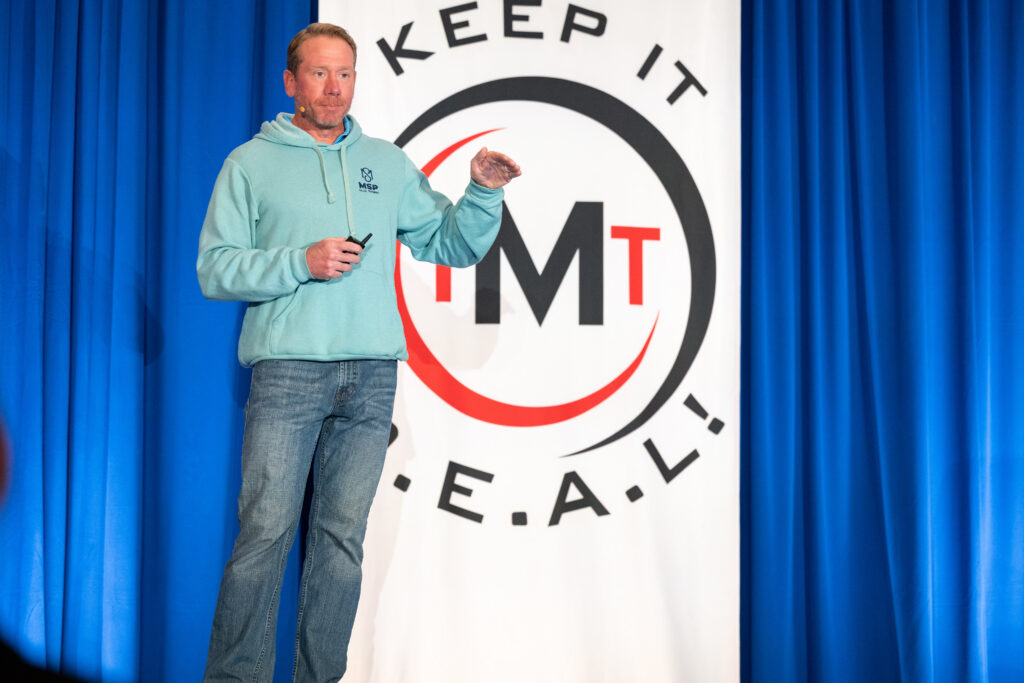
These factors mean that it’s more critical than ever for MSPs to demonstrate value, not just to prospects, but in their ongoing customer relationships. In an interview with MSP Success, Dan Tomaszewski, executive VP of channel at Kaseya, shared how MSPs can best demonstrate that value to prospects.
“You can’t sound like every other MSP,” he says. “You can’t just talk about security and compliance. You need to ask what success looks like. What are the KPIs? What are the metrics? What are the goals they have for their company? How does their company really want to grow and mature? Because if they hit [those goals], they’re happy.
So, from an IT perspective, how you align to that—and helping them not only achieve that but go beyond it—puts you in the ROI column and not the COG column.”
When it comes to relationships with existing clients, “it comes down to your service delivery,” says Tomaszewski:
- “Are you delivering quality, great services?
- Are you staying in contact with your customer?
- Are you doing quarterly business reviews?
- Are you building a relationship?
- Are you hitting the things that are important [to your client]?
From a value standpoint, if you’re not up to date with everything, you’re leaving a lot of hanging fruit for other MSPs now to come in, show that measurable proof, and take that business.”
The talent gap becomes the biggest constraint on growth—and culture is the solution
In the 2025 report, respondents cited tool issues as their biggest operational constraint, with 27% of respondents saying they were not using their software solutions to its fullest. This year, that number dropped to 18%. This shift indicates that tool-related friction is easing—further supported by the fact that 83% of MSPs said their IT management tools significantly enhance operational efficiency. Instead, workforce limitations are becoming the defining operational challenge, as reports of difficulty finding and hiring skilled technicians jumped from 9% to 16% as a top operational constraint YoY. This indicates that MSPs’ internal talent capacity is not keeping pace with their expanding stacks and client expectations.
Additionally, Tomaszewski speculates that this sharp jump may be partially due to the increase in cost of living; “if people can go make another 10, 20, 30 grand down the street, it’s an opportunity,” he says. “That’s why a strong company culture is more critical than ever. Culture is both a key way for MSPs to attract promising candidates to their business, and retain the employees they already have. People want to work for a mission they can get behind, says Tomaszewski. “[They want to] value the leader of the organization [and] align with their vision and their goals. People do very well when they know what the vision is and how they can play a role in helping drive that vision.”
Your company culture isn’t a buzzword; it’s a competitive advantage. Consider, does your entire team “know what success looks like? Do they have ability to play a role in it, or are they just there as another piece of the job?” asks Tomaszewski.
He adds, “I think business owners need a reality check of what is the real culture of their facilities. MSPs now are investing in their culture with things like luncheons, outings, and gym memberships. Things that make it hard to leave because you feel like you’re part of something special. If you can retain your talent through the benefits, the family, the culture, and what you’re doing, it will help you produce a longer standing business.”
AI, Cybersecurity, and BCDR in High Demand
AI and automation rank as the top IT problem or service need of clients in 2026 at 48%, with security services (42%), and backup and recovery (36%) following close behind. Revenue from AI has not yet caught up with the demand, however. Only 13% of MSPs identify it as a meaningful revenue source, signaling that MSPs are still defining, packaging, and pricing AI services.
But getting up to speed—and quickly—is critical, because “that 13% of MSPs are the ones coming after your current customers. It’s a big wedge gap for them,” says Tomaszewski.
Most MSPs deploy internally first; the next step is to replicate it for their customers. “We know that’s where the industry is going. But you’ve got to get smart, understand it, do it yourself, and then roll it out to your customers.”
Security and BCDR continue to be strong revenue drivers. “Security is always top of mind because everyone’s trying to protect themselves. There are regulations and compliance [laws] now making it mandatory. A lot of features that were hard to sell before are starting to open up and shift in MSPs’ favor,” Tomaszewski says.
“In BCDR, I think the world of compliance is really getting heavy. You’ve got to have critical backups of your SaaS applications. You have to be able to provide evidence of compliance. A lot of people used to push backup by the wayside, but you’re seeing it come back more and more because the need is there; the demand is there. You just have to uncover it.”
Read the full 2026 Kaseya State of the MSP Report here.