Customer acquisition isn’t just a growth tactic for MSPs—it’s a survival skill. This year, though economic uncertainty, increased competition, and tech complexity tested that skill, many MSPs are still winning new business—and in some cases, growing faster than last year.
To understand what’s actually working right now, MSP Success surveyed readers to uncover how many clients they’re adding, where those leads are coming from, what they’re spending, which strategies are paying off, and what’s getting in the way. From referral-driven growth and maturing sales teams to the rise of organic social media, the data reveals a customer-acquisition landscape that’s shifting—and what the top performers are doing differently.
Headwinds and Tailwinds
MSPs did face some economic headwinds this year. “We do notice that it’s harder for people to make a decision, especially if it’s a long-term commitment with a higher dollar amount around it,” says Theresia Joseph, CEO of Tavanca, a 10-person MSP founded in 2019 in Vancouver, Canada.

Tech complexity fears compound the economic landscape, says Doug Bates, president and owner of CMIT Solutions of Southern Atlanta Crescent & Atlanta Northwest. “They’re not falling over themselves looking for new IT providers because it’s such a dark art. They’re afraid of what they don’t know, so a lot of people are staying with who they have. I think the fear of change in this uncertain environment is a little scary also. Things are a little tighter.”
However, he adds, “An election year … is always a tough year. People have been playing it pretty close to the vest. This year the new clients that we’ve added all came after the first quarter. It definitely picked up speed and we’re seeing a lot more activity here at the end of the year going into ’26.”
Bill Marshall, president and CEO of Moonshot Solutions, a 27-person MSP based in Overland Park, Kansas, is also optimistic and says they added more customers this year than last. “When you find a customer and there’s pain, there’s going to be a decision made and we just want to be at the forefront of that,” he says.
The Get
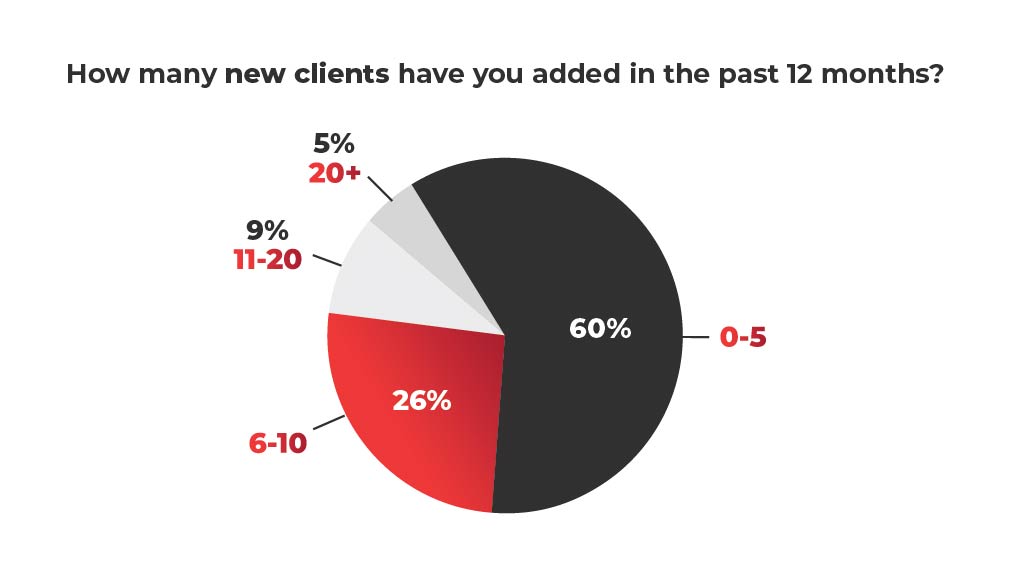
The majority of MSPs surveyed gained up to 10 new customers in the last 12 months, with 60% adding 0-5 and 26% adding 6-10. Nine percent added 11-20 new clients, and just 5% grew their customer base by 20+.
Just over half (53%) are only spending 0-5% of their annual revenue on marketing to prospects. Another 26% are spending 5-10%, and just 5% are devoting more than 25% of annual revenue to acquire new customers.
The top strategy to gain customers is still referrals, cited by 43% of respondents, followed by cold outreach (18%) and SEO/website (16%).
Bates says 90% of their leads come through referrals and networking. This year, they’ve added 11 new customers and have three outstanding proposals.
Joseph says Tavanca landed about one customer per month this year, mainly through referrals, “but also we got lucky lately with social media.”
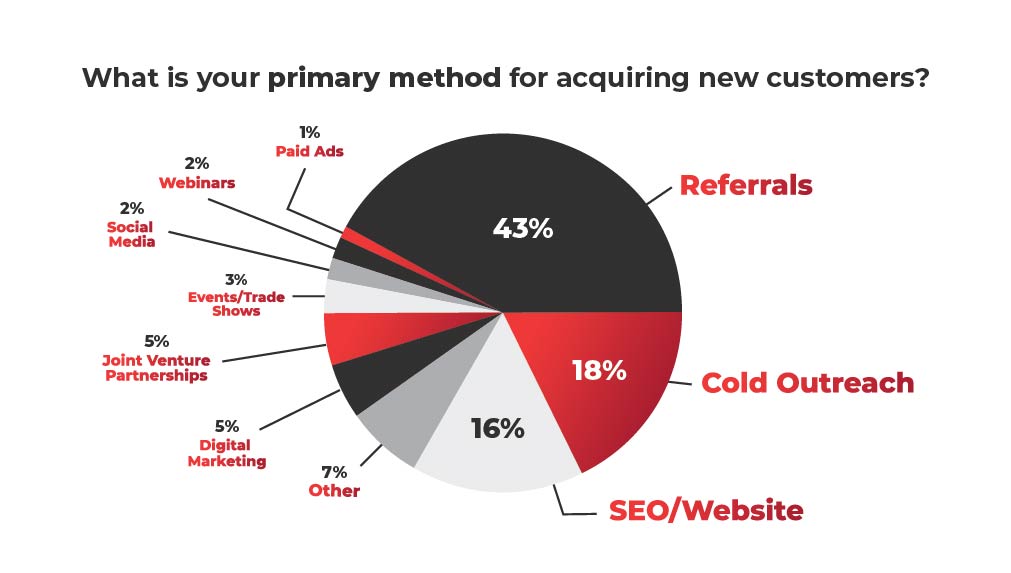
While social media was far down the list of how most MSPs are acquiring customers (2%), it’s an avenue where Dan Gilligan is starting to reap some success. According to Gilligan, founder of CEO of IntegraMSP, a nine-person MSP in Dallas, Texas, founded in 2009, referrals started drying up in 2022-2023, but now they are getting results from LinkedIn, Instagram, and Facebook. The best part? It’s all organic, he says. “We link everything that we post back to our website, where they fill out the form and it comes in through Keap,” a marketing automation platform.
Gilligan says the fact that people can engage on social media and ask others what they think about IntegraMSP is key. “It’s like a source of truth that they have.”

He says they typically add five to 10 new customers per year.
Moonshot Solutions added 13 new customers this year with 30% YoY revenue growth. Marshall attributes some of that success to cold calling, something they hadn’t done before, and a maturing sales staff that built up a pipeline. “It’s them working their centers of influence, networking events … building those organic relationships and making a sale that way.”
The Hunt
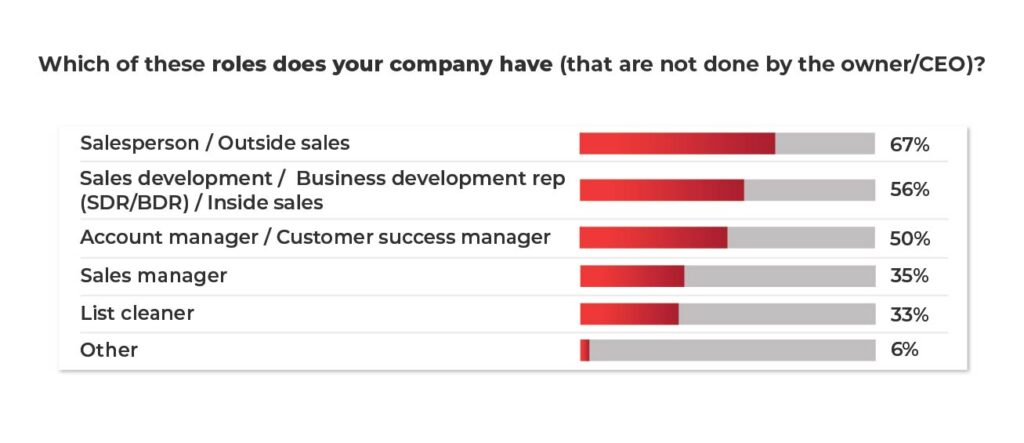
MSP survey respondents are almost evenly split on having a dedicated sales team or individual responsible for customer acquisition vs. strictly CEO/owner-led sales. The various roles being employed include list cleaner (33%), SDR/BDR/inside sales (56%), outside sales (67%), sales manager (35%), and account manager/customer success manager (50%).
Marshall, for example, has a part-time list cleaner in addition to the sales team, and a vCIO who acts as an account manager too.
Gilligan, who does sales himself, recently hired a third-party firm for list cleaning and follow-up calls for the 50 mailers they send out every week.
Bates’ franchise partner serves as director of sales for their second location. They also have a marketing director who handles social media, website content, and collateral for trade shows and events. They are ending their shared SDR program, however, as it hasn’t netted the desired results due to the territory restrictions of the franchise.
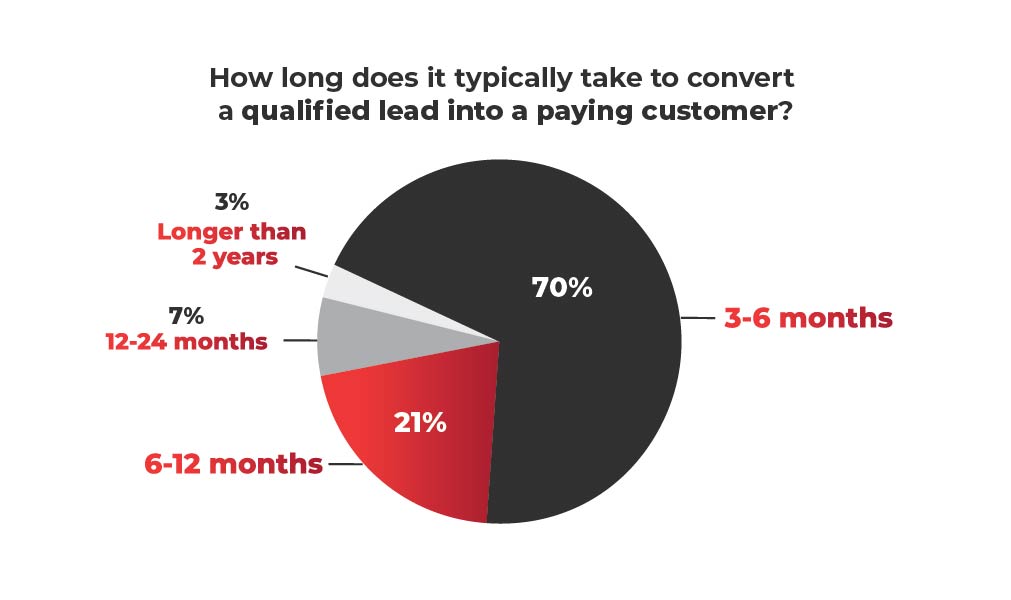
No matter what roles are involved in the customer acquisition process, though, turning leads into paying customers is critical. For 70% of MSP Success survey respondents, that takes 3-6 months. For another 21%, it takes 6-12 months, and for 7% it takes 12-24 months. Just 3% of respondents say it takes longer than two years.
The Stand Outs
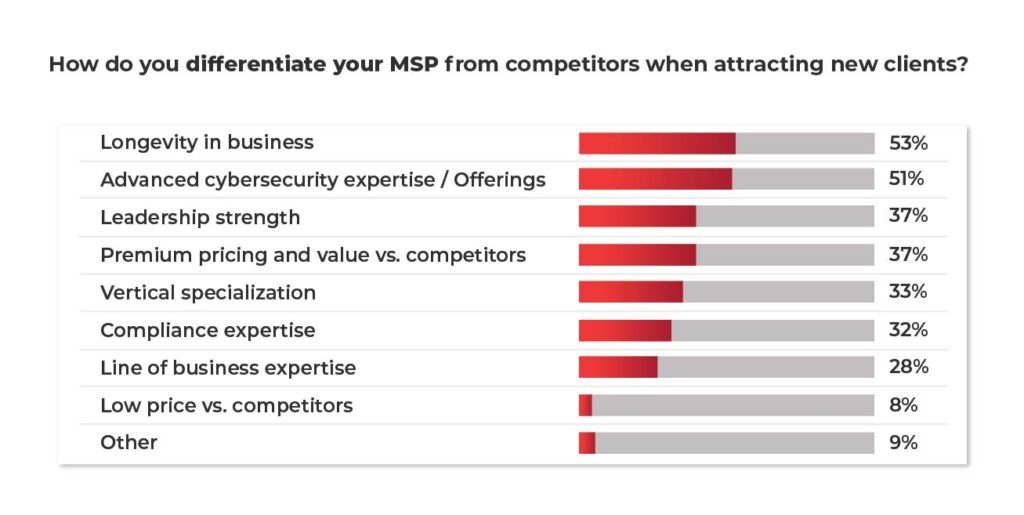
Survey respondents are using a variety of strategies to differentiate from the competition. Fifty-three percent are touting their longevity in business and 51% are leaning into their advanced cybersecurity expertise and offerings. Other favored strategies include highlighting leadership strength and premium pricing/value vs. competitors (both at 37%), vertical specialization (33%), and compliance expertise (32%). Only 8% of respondents say they use low price as a differentiator.
For Gilligan, a focus on construction companies has allowed them to build expertise in their line of business accounting systems, which they provide Tier 1 support for, as well as work with the accounting software vendors. “A lot of other competing firms will just blow that off and say you’ve got to call Sage or QuickBooks, but we’ll hold their hands through the Tier 1’s,” Gilligan explains.
Bates’ MSP also has line of business expertise in the five vertical markets they target, but leans into their local help desk as a differentiator. “Everything is W-2 employees, here in our office and local in our geography.” He says the “hometown feel” of customers seeing CMIT staff in their stores, churches, and movie theaters is key. “We want that face-to-face relationship with our local clients.”

Moonshot Solutions uses their cybersecurity and compliance expertise as a differentiator. “We try and find the people that take security seriously,” Marshall says, “and then we can easily differentiate our offering, which has basically everything that you should be doing as a company incorporated into our price.”
As far as what marketing campaigns work to acquire customers, Joseph says she has had recent success following TMT’s Celebrity, Authority, and Trust (CAT) program. “That really helped to build the reputation right away and [get] the testimonials going.”
Gilligan has had success building marketing campaigns on LinkedIn around questions potential prospects pose on the site. They include that in their weekly email newsletter as well.
For Bates, they’ve had the greatest success with their structured referral program. “They get money if they refer us,” he explains. “A lot of them will just donate it to a charity instead of taking the money themselves. We’re very fortunate in that our customers really hold our relationship and the service we provide in high regard.”
The Challenges
The reader survey also asked MSPs about their biggest customer acquisition challenges. Their open-ended responses include getting leads, getting first-time appointments (FTAs), competing against lower-priced MSPs, and customer inertia to move on from their existing MSP, along with fear of change in the current economy.
Gilligan says he has recently gotten pushback from prospects because they don’t offer 24/7 support, something he says he is now looking into.
Joseph adds that building trust with prospects is a challenge, given the overwhelming amount of information on social media about competitors and pricing.

While Bates is happy with his close rate when he gets leads (65-80%), he says the challenges is “finding the opportunities and continuing to farm for leads through our referrals and through our customers.”
Marshall says their biggest challenge is coming up against long-term contracts that prevent prospects from making a change, even though they’re unhappy with their current MSP provider.
Follow the Money
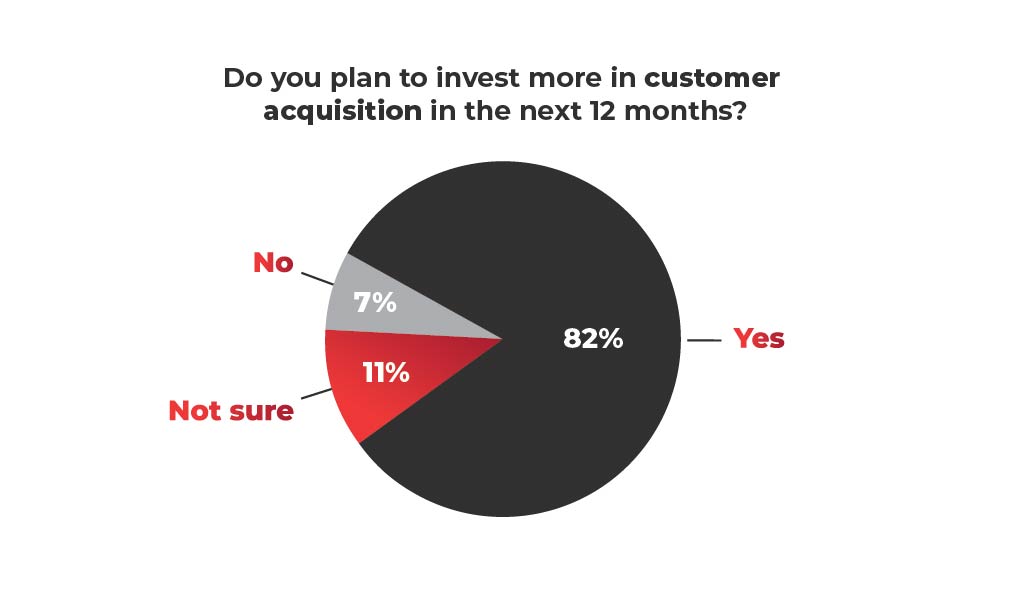
The business adage, if you’re not growing, you’re falling behind, which likely explains why 82% of survey respondents plan to invest more in customer acquisition in the next 12 months. Not surprisingly, 83% of respondents will focus on the SMB market, but verticals (47%) and the midmarket (47%) are also of interest to respondents.
Gilligan and Bates are planning to invest more in industry-specific trade shows and events. Marshall has that on the docket too, along with bringing on an inside sales rep, running more campaigns through their marketing automation platform, and focusing on their website as a lead generator. For her part, Joseph plans to build a marketing department.
Parting Advice
If you’re ready to ramp up your customer acquisition strategy, Gilligan suggests picking a vertical and targeting a small area at a time. “Pick your local city and go after every single business in that city with the vertical that you want to hit and then move on from there. I think if I did that earlier on, I would have been much more successful.”
Joseph recommends consistency in marketing and prospecting, following a structure, and not getting demotivated by “no’s.” Also, she advises against trying to do everything all at once; instead, focus on one campaign or effort until it’s working.
“Do it good,” she says. “Not always perfect, but do it good. And when this works, do the next one, and the next one, and then maybe go back and perfect what isn’t working as well.”
Bates cautions against using scare tactics with prospects and customers. “I think that’s reprehensible that you prey on people’s lack of knowledge in order to get them to buy your services. I think you should sell because you have a product and a service that provides the right value for the person that you’re dealing with and it’s a win-win situation.”
Finally, Marshall encourages MSPs to join a peer group to learn from others; he belongs to both TMT and TruPeer. He also stresses to never forget how important referrals are. “We’re finding there’s a lot more that we could be getting if we just went out and asked for it.”
If you missed the report from our last reader survey on AI and automation, see The Automation And AI Revolution: How Forward-Thinking MSPs Are Getting Ahead