The help desk has long been a core component of every MSP—as has the question of how to make it more efficient. In an effort to streamline their own service desk, an Australian MSP created Pia, which was later launched as a separate product in the channel.
Pia is an AI and automation solution for MSPs that lives within their PSA and integrates directly into their tech stack. Their focus from the start has been about automating the service desk, to enable MSPs to do more with fewer resources and technicians. MSPs “need to do more for their customers, respond faster, make fewer mistakes, and not miss steps in the process,” says Pia CEO David Schwartz. That’s where Pia can help.
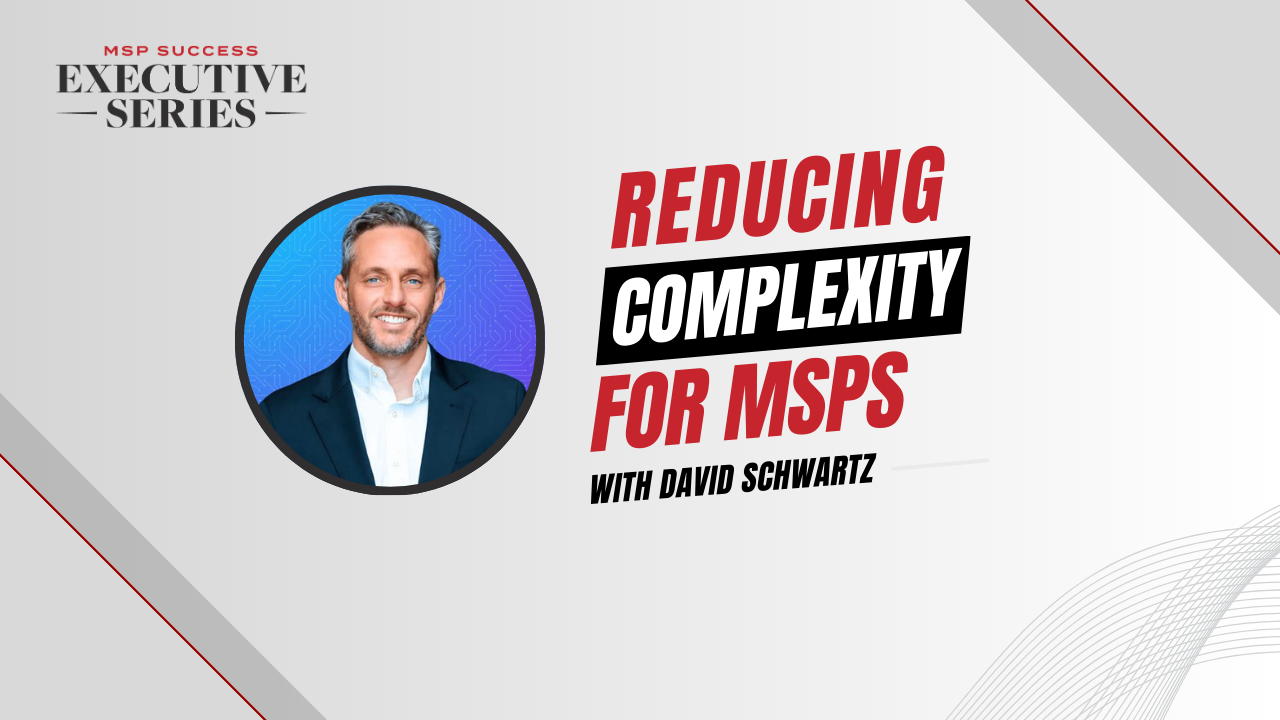
In this interview, Schwartz digs into Pia’s goals for serving the MSP community, what it means to be an “invisible engine of automation,” and what they’re bringing to the table next. This interview has been edited for clarity and length.
Key Takeaways:
- Your service desk is bogging you down; automation is the way to streamline tickets and keep your techs engaged and customers happy.
- Pia works behind the scenes to handle, prioritize, and document tickets.
- Agentic AI will have a major impact on the channel—and Schwartz anticipates customers’ standards increasing in the process.
MSP Success: What’s at the heart of Pia when it comes to serving the MSP community?
Schwartz: A huge chunk of it is listening. The team that built the product very much understood that, because it was built by an MSP specifically. There are lots of complexities in the MSP world; an MSP could have 20 customers or 2,000 customers, and none of them look the same. They all have nuances and uniqueness to them.
Being able to build an automation tool that can accommodate these unique scenarios requires some thoughtfulness, and the only way you get there is by listening to your partners or your customers. That’s what’s really at the heart of what we do—taking feedback from them, understanding the challenges that they’re seeing, and creating a product that can be replicated, but also customized for their particular needs.
MSP Success: What benefits and competitive advantages do you offer to MSPs that work with you?
Schwartz: The efficiency they get out of the gate is the biggest competitive advantage we’re seeing. Now, I don’t think any two MSPs are the same; they all have their secret sauce. That’s why it’s so hard to set industry benchmarks. I’m a bigger believer in benchmarking against yourself, as is the Pia leadership team as a whole.
So, what we’re seeing is regardless of how that MSP runs the metrics, they can consistently see improvements in performance, such as a lot more tickets being resolved without any technician ever touching them. They’re seeing higher retention rates with their customers and improved margins.
MSP Success: You’ve been focused on making Pia “an invisible engine of AI automation” that delivers measurable gains for MSPs. Can you tell me more about what that looks like?
Schwartz: Yeah, so Pia is a unique product because it’s not one that techs log into every day. You don’t live in this product like your RMM or PSA. We set out to build this by making it less visible; it’s just part of your everyday life, already built into your PSA.
By the time a ticket hits your PSA, so much work has already been done leveraging Pia. You’ll see the ticket has already been triaged and updated with category and subtype, that it’s understood using natural language, and you’ll know what kind of request it is. Basically, it’s an assistant that lives with you and your PSA and has already started prepping the ticket for you.
We look at it as this invisible element because you don’t have to significantly change your behavior. In fact, your behaviors get simplified because you don’t actually have to leave your PSA. Pia simplifies things, but to give you that level of confidence, it still shows you everything it’s done along the way. It’ll do a lot of the work behind the scenes, document it, assign the time that the tech worked on it, resolve the request, and leave a log telling you exactly what it did.
MSP Success: What do you anticipate the overall impact of agentic AI on the channel will be?
Schwartz: Really significant. I don’t think we even understand yet how significant it will be. The industry is in a unique place, with MSPs needing to go through this transformational mindset, take a step back, and look at what’s happening in the landscape. I think they might get left behind if they’re too slow to adopt the tools that are going to give them more agency and automation. Because the reality is, customers are expecting more, not less.
If you’re not in a position to tackle that and you continue scaling through hiring exclusively, it puts you in a really tough spot because you lose the ability to ensure quality, consistency, and timeliness. I think the channel is adjusting to the idea of blending together the two worlds of taking care of your team and supporting them with the best tech stack possible.
MSP Success: What is on Pia’s roadmap for the rest of this year?
Schwartz: We have a couple of really exciting partner integrations that we’re launching over the next couple of months during event season. We also have a couple innovative enhancements or additions to the platform that we’re going to be launching probably in November, nearing the end of the year. Those will allow MSPs to leverage a lot of prebuilt automations from a lot of vendors in the space that they didn’t have access to before.
We give MSPs all this amazing out-of-the-box functionality, integrations, automations, etc., but there’s so many scenarios where MSPs want to do more. So, we’re working on making it easier for them to do more; we’re building a lot of that functionality right now.
If you missed the previous installment in our Executive Series, read how Moovila is helping MSPs beat the odds of missing project deadlines here.