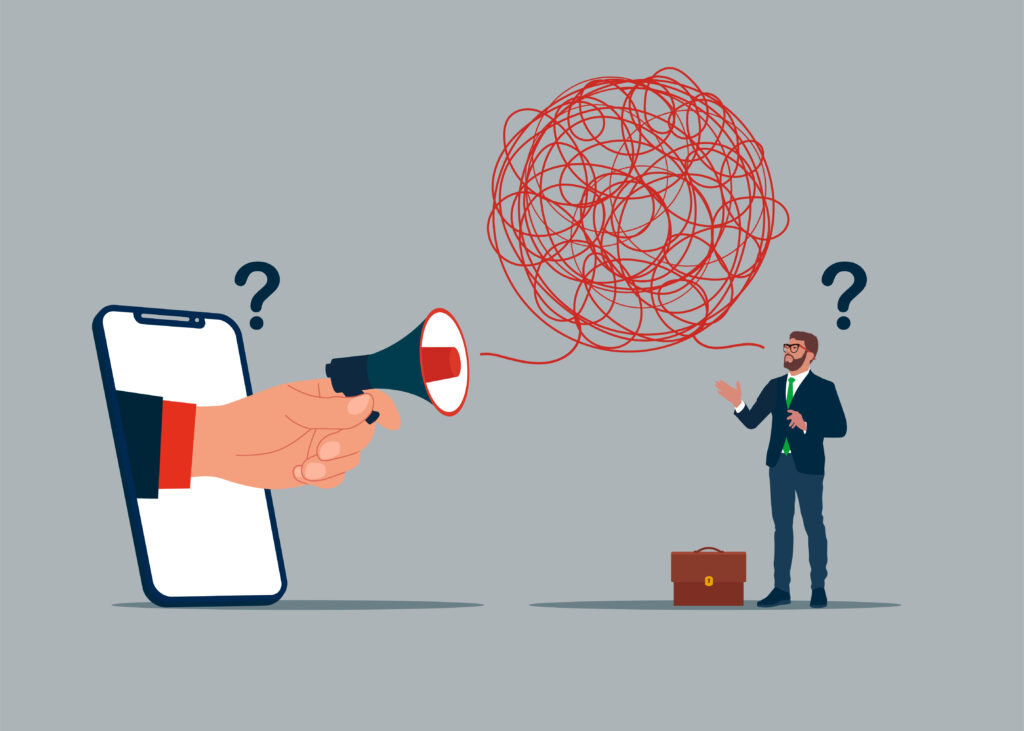
One of the most powerful marketing and business advantages you can give yourself that accelerates the sales process and significantly reduces fee resistance is having (and being able to powerfully articulate) a great USP, or unique selling proposition.
Simply, a great USP answers the question, “Why should I, your prospective customer, buy from YOU over all the other MSPs vying for my business?”
Whether a prospect verbally asks this or not, they ARE thinking it, and they are weighing in their mind which MSP they should trust. Price is one consideration, but it’s absolutely not the only consideration. However, if you look, sound, and act like all the other MSPs they are talking to, failing to convince that prospect of your superiority in value, service, expertise, or knowledge, they will default to price or some other factor that is irrelevant to the quality of service you deliver.
The Critical Importance of Differentiation
Ad man Rosser Reeves, an advertising pioneer who made his mark in the early 1940s working for Ted Bates & Company, coined the concept of a USP. He correctly stated that an advertisement or commercial should show off the value of the product, not the cleverness or humor of the person creating it. Reeves was the originator of the Anacin commercials. Those commercials “made more money than Gone With The Wind,” beating Anacin’s competitors and driving it to the top of its category. And the M&M’s tag line, “Melts in your mouth, not in your hands,” is still remembered today (although not used in M&M’s commercials anymore).
In the 1940s, when Reeves was creating advertising campaigns, product competition, distribution, and availability were increasing. That gave consumers more choices, requiring advertisers to fight for market share. Today, it’s ridiculously competitive. There’s not a single product or service category that doesn’t have dozens or even hundreds of competitors that are EASILY found and transacted with.
I conducted a research project for a presentation I delivered earlier this year on lists and market share, using the Nashville area as my sample. It’s a good-size city, but not anywhere as large as a Chicago or LA (right now it’s the 21st-largest city in the U.S.). So it was perfect for providing an example to the audience, who were from small to large cities across the world.
Here’s what I found: In the Nashville metro area, there are 57 companies that sell IT services and support, all found via a simple Google Map search. Out of those 57, 40 are what I would consider legitimate competitors. The others either did not have a website or appeared as a 1099 contractor that somehow got listed on Google as an IT services company.
In reviewing their websites, some were obviously tiny, and likely running the equivalent of a “job,” not a legit MSP. But many were serious and viable competitors—well over 20 of them. If I were looking for an IT services firm, it would have been difficult to pick one based on what I saw on their websites. Only about three or four had anything on their sites that would convince me of their professionalism and trustworthiness. The rest appeared to be EXACTLY the same, or would have confused the average business executive conducting a search for IT support.
If you are an MSP and you’re spending money on ANY marketing or advertising, having a website that doesn’t plainly explain what you do and fails to build confidence and encourage conversion (getting the prospect to call or engage) is unforgivable. It’s costing you MILLIONS in lost opportunities. Yet it’s far more popular than the opposite—having a great site that clearly defines what you do and who you do it for, as well as a good argument as to why a prospect should buy from you.
Why Can’t Most MSPs Articulate This?
Candidly, most MSPs can’t articulate a USP because they don’t HAVE one.
And they don’t have one because they’ve never worked on developing one.
A USP isn’t something you’re born with. It also doesn’t just “happen” because you’re good at service delivery, cybersecurity, or operational efficiency. You need to first KNOW who your customer is. Then you must strategically decide and develop what your USP should be so that it delivers meaningful value to your chosen marketplace sufficient enough to get them to want to buy from you.
LensCrafters didn’t wake up one day and say, “Geez, we can fulfill on prescription glasses in about an hour … We should talk about that in our advertising!” The company’s founder, E. Dean Butler, designed this concept when working on an advertising campaign for a family optical business while he was employed at Proctor & Gamble. He saw a frustration: Getting prescription glasses was a long, irritating process that required you to make an appointment at your doctor’s office, wait for weeks for the prescription to be filled, then make another appointment to pick the glasses up. His idea was to create a place where you could get glasses over your lunch hour through the week (which is also why the stores were put in shopping malls).
Tom Monaghan revolutionized the pizza business by first introducing free delivery. Then making his famous “Fresh hot pizza delivered in 30 minutes or less or it’s free” guarantee. That didn’t happen by accident. He didn’t look at his pizza delivery and say, “Hmmmm, we seem to be delivering these pizzas in under 30 minutes—why not guarantee it?” He had to decide that was something his customers would love (and they did) that would differentiate Domino’s Pizza from all the other pizza delivery shops and give him a strategic competitive advantage.
Very early on in my business, my USP was the fact that I could increase sales of any company without them spending a single dime on advertising or marketing. This was an outrageous claim that was NOT being made by most marketing consultants, who make money on getting clients to SPEND money on marketing. It was also a bold claim (and one I could easily fulfill on).
I then moved to a money-back guarantee as a way of differentiating myself … and, from there, intentionally designed our USP to be what it is today, dropping the money-back guarantee several years ago to improve the quality of member I was getting—and because our “more documented client success stories than any other marketing or sales consultant in this industry, period” claim was so strong that removing the guarantee did nothing to suppress sales. In fact, it increased the LTV (lifetime value) of our clients because we were no longer dealing with cheapskates, looky-loos, and “techs with helpers” who were never serious about marketing, sales, and growth to begin with.
4 Components to a GREAT Unique Selling Proposition
There is a four-point litmus test I’ve developed for a powerful USP. It must be unique to you; it must have meaningful specifics; it must have a strong appeal to your target market; and it must be defensible before the prospect buys. Let’s break these down.
1. It must be UNIQUE to you.
Technically, no one else should be able to make the same claim. This is a tough one because anything you create that gives you a unique advantage in marketing will quickly be copied by your competition—or they will at least claim they can deliver the same outcome or the same level of service. That’s why the next three points are essential to adding depth and credibility to whatever your claim is.
2. It must have meaningful specifics.
One of our members submitted this as their USP: “We’ve proven to improve both top-line and bottom-line revenue for our clients.” The problem with this statement is that it lacks specifics and therefore appears to be marketing puffery. Essentially a veneer, it is supposed to look like real wood, but we know it’s a thin layer of fake wood glued to particle board—and people know the difference once they get a closer look.
That’s not to say this member was lying or falsifying information. In fact, he had six case studies with metrics to back up his claim. The problem was that his USP statement lacked meaningful specifics. Further, he cannot honestly claim HIS services directly impacted top-line or bottom-line revenue. Top line, or sales, was not an area he could directly impact other than to make sure the sales reps and company could perform.
So I suggested he throw that out and instead focus on the specific area he did impact, which was IT costs. More specifically, total cost of ownership. Using that as a metric, his unique selling proposition could be, “We routinely lower our clients’ IT costs and overall technology spend by 14% to 31%.” If we really wanted to get crazy, we could guarantee it: “We guarantee to lower your overall IT costs by 14% to 31%. Call us for a free IT Services Assessment. If we cannot show you how to lower the total cost of ownership for IT by at least 14%, we’ll pay YOU $1,000.”
3. It must have a STRONG APPEAL to your target market.
This is why you MUST start with defining the “Who” or target market of the marketing equation. For example, one member who was selling to medical practices submitted this as part of his overall USP:
“We Make IT Personal – We create partnerships by building connections. We believe that working with you and your business is an opportunity to be a part of building something exceptional. We have the courage and commitment to both learn about and align with you and your team. We care for your business like it is our business and we are dedicated to its success.”
There are a few problems with this. For starters, these statements are really vague. What does “create partnerships by building connections” really mean? But a bigger problem is that it’s NOT a benefit, and his target audience does NOT CARE about this. Therefore, it violates the litmus test of needing to have a strong appeal. The practice manager of a busy medical practice just wants their IT systems to work; they don’t want to create partnerships and build something exceptional.
So I asked this member, “WHO is your typical client, and what do they worry about? What are the biggest problems they come to you to solve?” He said it’s typically a “she,” a 40- to 60-year-old woman who is not technically savvy, does not perceive they have a problem with HIPAA, and spends their day dealing with “utter chaos,” reacting to problems, firefighting. Typically they come to him for a single problem—the phone system is not working, they have a virus, or (the big one) something with the electronic health records system is not working. BINGO. So I suggested we make this one of his USP points:
“We Eliminate Every Single Problem with Electronic Health Records (EHR). Our medical clients see a 99% reduction in EHR issues after becoming clients of ours. From slowness, workflow issues, and inability to access notes on patient records, to reentry and rework due to bugs in the system, we solve them ALL.”
4. It must be defensible before they buy.
A USP must be proven. One of the points in our USP is that we have “more documented client success stories than any other marketing or sales consultant in this industry, PERIOD.” That’s not only true, but it’s specific, meaningful to our clients, and defensible before a prospect buys. After all, they can go to our website and see the hundreds of reviews, testimonials, and case studies.
This also brings me to the critical point: A USP needs to be TRUE. If you lie, or fail to deliver on your promise, you’ll only accelerate the pace at which people discover you’re an incompetent liar.
At the time of writing this, there has been an uptick in brand-new MSPs starting up—a surge that began back in 2022 and has only recently started to slow.
Unfortunately, most of these start-ups are not sophisticated entrepreneurs who understand business financials, marketing, and sales, so they play the only “marketing” card they know how to play to acquire new clients: cheapness.
This presents a big problem because even though they are not able to deliver the same quality of service and support as more mature MSPs, many of your clients see them as “good enough.” Therefore, those buyers willingly sacrifice a “Cadillac” experience for cost savings. That, coupled with the fact that you’re not dealing with an experienced buyer of IT services who can discern what “good” is, makes for a difficult selling environment.
That’s why it’s more critical than ever to be able to articulate to a prospective customer—or even a CURRENT customer—why they need to trust YOU over any and every other option available.